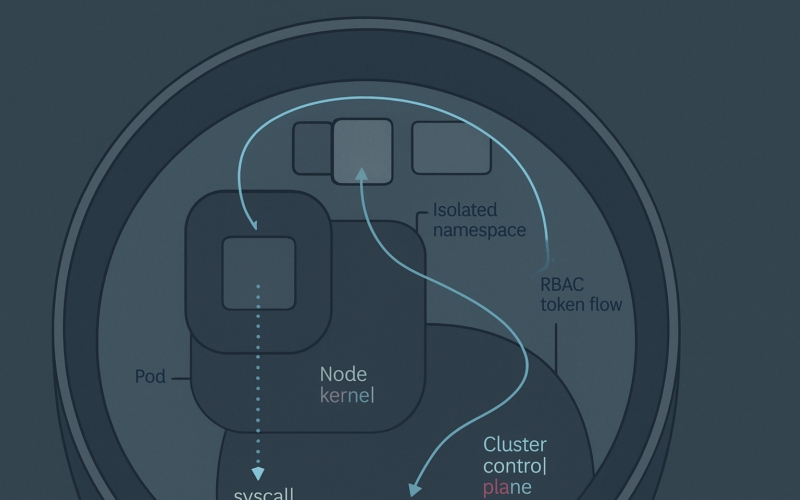
Pod Security and Container Escape Surface in Shared Kubernetes Clusters
A practitioner’s view of the realistic container escape surface in multi-tenant Kubernetes — kernel boundaries, runtime gaps, and the controls that actually move the needle.
The landing site for Trackr Services
A practitioner’s view of the realistic container escape surface in multi-tenant Kubernetes — kernel boundaries, runtime gaps, and the controls that actually move the needle.
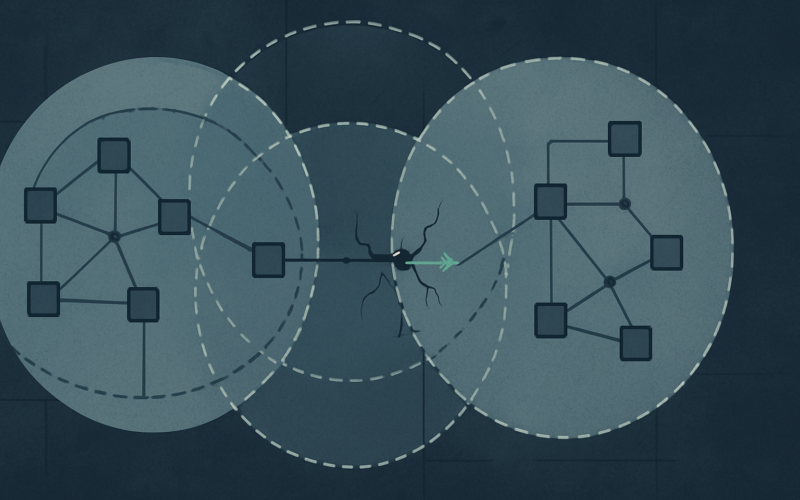
Agentic systems with tool calls, MCP servers, and dynamic context don’t fit the static system boundary model RMF was built for. Here is how to draw a defensible boundary in 2026.
The Model Context Protocol went from niche spec to ubiquitous integration layer in eighteen months. The threat model did not keep pace. A look at what is actually exposed, and how it maps to NIST SP 800-53.
Agentic AI has moved from research demo to active red-team operator, reshaping phishing, exploitation, and the fundamentals of defense. Here’s what’s changing in 2026 — and why human judgment still matters.
Technical Deep Dive: Apple’s AI-Infused Smart Glasses Targeting a 2026 Launch Reports from multiple sources indicate that Apple is advancing plans to release consumer-grade smart glasses, with a target launch timeframe positioned towards the end of 2026. This initiative appears to be a significant component of Apple’s broader strategy to integrate more deeply into the …
Beyond the Buzzwords: Unpacking the Multimodal AI Revolution of Early 2025 The relentless march of artificial intelligence continued its accelerated pace through late 2024 and into the dawn of 2025. While large language models (LLMs) had dominated headlines for the preceding years, the most significant recent developments lie in the realm of true, native multimodality. …
RMF Control SR-9: Tamper Resistance and Detection requires organizations to implement anti-tamper technologies and techniques to protect systems and system components from unauthorized modification or disruption. This is important for protecting information systems from unauthorized access and ensuring that systems are performing as expected. Supplemental Guidance The Risk Management Framework (RMF) is a cybersecurity framework …
RMF Control SI-15: Information Output Filtering requires organizations to validate information before it is output to users or systems. This is important for protecting information systems from unauthorized access and disclosure. Supplemental Guidance The Risk Management Framework (RMF) is a cybersecurity framework that provides a process for managing cybersecurity risk to systems and organizations. RMF …
RMF Control SC-40: Wireless Link Protection requires organizations to protect external and internal wireless communication links that may be visible to individuals who are not authorized information system users. Adversaries can exploit the signal parameters of wireless links if such links are not adequately protected. There are many ways to exploit the signal parameters of …
RMF Control SA-10: Developer Configuration Management requires organizations to ensure that software and firmware components distributed to the organization are exactly as specified by the master copies. This is important for protecting information systems from unauthorized changes and ensuring that systems are performing as expected. Supplemental Guidance The Risk Management Framework (RMF) is a cybersecurity …