CNSA 2.0 and the PQC Migration Reality Check for 2026
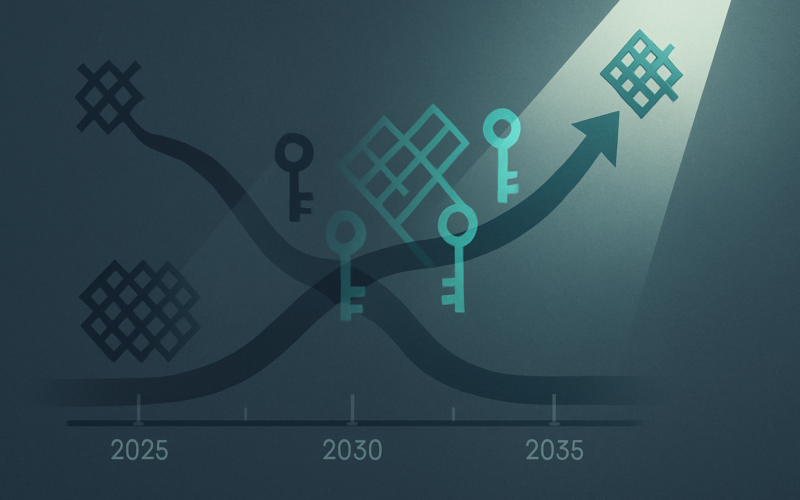
CNSA 2.0 deadlines are no longer abstract. Here is what crypto inventory, hybrid deployment, and agility actually look like when an assessor walks the floor in 2026.
NIST has finalized the first wave of post-quantum standards and the federal mandates are no longer aspirational. Here is what ISSOs, architects, and crypto inventory owners need to have on paper in 2026.
Data obfuscation is the process of modifying data to make it unreadable or incomprehensible to unauthorized users, while still retaining its value for authorized users. It is a technique that can be used to protect sensitive data from being accessed or stolen by unauthorized individuals. There are a number of different data obfuscation techniques that …
Public key infrastructure (PKI) cryptography is a system that uses public key cryptography to secure data transmission and authentication. PKI is based on the use of digital certificates, which are electronic documents that bind a public key to an identity. How PKI Cryptography Works PKI cryptography works by using a pair of public and private …
Elliptic curve cryptography (ECC) is a public-key cryptography system that uses elliptic curves to secure data transmission and authentication. ECC is based on the mathematical theory of elliptic curves, which are algebraic curves that have been shown to be very difficult to solve. How ECC Works ECC works by using a pair of public and …